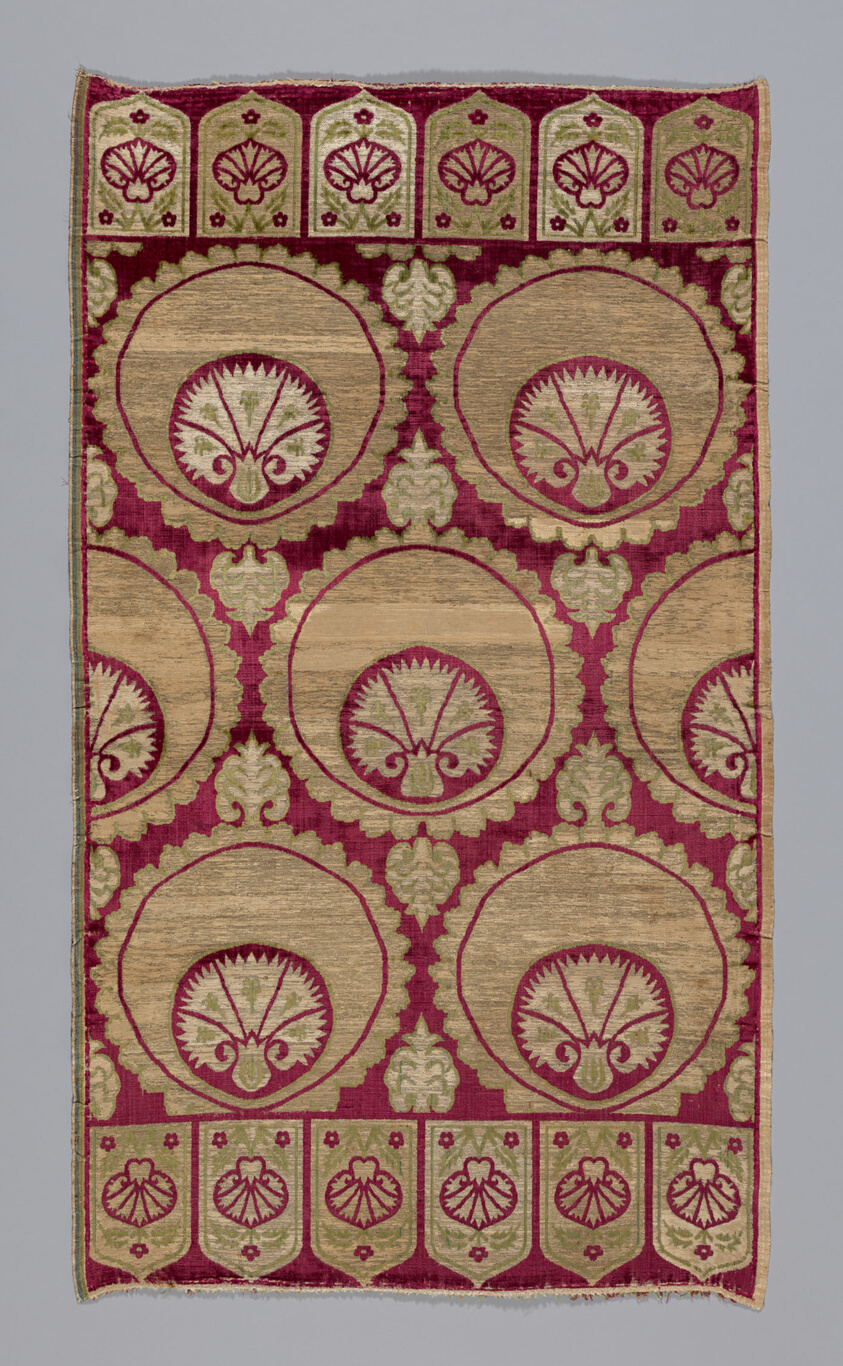
An Artefact of Opulence: Deconstructing the Brocaded and Voided Velvet Cushion Cover
Within the refined lexicon of material culture, few artefacts possess the capacity to articulate status, artistry, and tactile luxury as succinctly as a cushion cover of a certain calibre. The specimen under consideration is not mere soft furnishing; it is a concentrated essay in textile engineering and aesthetic philosophy. Executed in the venerable traditions of classic silk craftsmanship, it embodies a fluid elegance that belies the extraordinary technical rigour of its construction. Its very existence speaks of a milieu where domestic interiors served as an extension of sartorial sophistication, where the principles of Savile Row—precision, structure, and an uncompromising commitment to the finest materials—find a parallel expression in the domestic sphere.
The Foundation: Warp-Float Faced Satin Weave
One must first appreciate the ground upon which this textile narrative is built: a warp-float faced satin weave. This is the equivalent of a superfine woolen cloth, the foundational worsted of a bespoke suit. The technique produces a ground fabric of unbroken, luminous silk, where the warp threads dominate the surface. The result is a material of profound depth and a characteristically soft, lustrous sheen—a perfectly prepared canvas. This satin ground provides not just visual serenity but a structurally sound plinth, offering the necessary stability and contrast for the elaborate ornamental elements to be superimposed. It is the quiet confidence of a well-tailored jacket, the essence of fluid elegance in its purest, most understated form.
The Architecture of Embellishment: Supplementary Elements
The artefact’s distinction, however, lies in its masterful deployment of supplementary components. Here, we move from the tailored ground to the intricate embroidery of a smoking jacket or the bespoke braiding of a military uniform. Three distinct systems of additional threads are introduced, each playing a deliberate role in the composition.
Foremost are the “silver” supplementary metal-wrapped silk brocading wefts. These are the artefact’s most declarative feature. Composed of a silk core meticulously enveloped by a slender strip of metal—likely silver or a silver alloy—these threads are introduced selectively to form the primary decorative pattern. They sit upon the satin ground, their metallic sheen catching the light with a calculated brilliance. This is brocading in its truest sense: a discontinuous weft, laid into the fabric only where the design demands, creating a raised, opulent motif without the weight of metal thread permeating the entire cloth. It is a studied application of splendour.
Simultaneously, supplementary binding wefts are employed. Their role is fundamentally structural and discreet, acting as the unseen tailoring stitches that secure the lavish brocading wefts to the ground cloth. They ensure the integrity of the design, preventing the metal-wrapped threads from loosening or snagging. Their presence is one of quiet assurance, a technical necessity executed with precision to protect the grandeur they help anchor.
The Pinnacle of Complexity: The Voided Velvet Element
If the brocading represents applied ornament, the incorporation of supplementary warps forming cut and voided velvet represents the pinnacle of this textile’s ambition. This introduces a third dimension, both literal and sensory. Supplementary warp threads are lifted over rods during weaving to create loops. These are subsequently cut, producing a plush, velvety pile that exists in specific, patterned areas—voided from the satin ground. The technique of ‘voiding’ ensures the velvet pattern is distinct, its edges crisp against the smooth satin. The interplay of textures here is profound: the cool, reflective gleam of metal brocade against the warm, light-absorbing depth of silk velvet, all upon a shimmering satin field. It is a harmonious dissonance of touch and appearance, akin to the contrast between a polished horn button and the nap of a cashmere overcoat.
Materiality and Connoisseurship
The material selection reveals a connoisseur’s hand. Silk, the queen of fibres, provides the core identity—its strength, affinity for dye, and inherent luminosity are non-negotiable. The cotton, likely present in the weft or as a stabilizing element, offers a discreet robustness, the hidden canvas lining that provides body without compromising drape. The metal-wrapped threads are the ultimate gesture of luxury, their tarnishing potential over time a tacit acknowledgment of the artefact’s value as a possession intended to endure, to acquire a patina of history. This is not mere decoration; it is an investment in material permanence.
Context: Fluid Elegance as a Design Principle
The described fluid elegance is not a happenstance aesthetic but the direct result of this formidable technical orchestration. The satin ground flows visually; the brocade motifs, though rich, are integrated into, rather than plastered upon, the fabric’s architecture. The velvet provides softness and depth, inviting engagement. The entire artefact demonstrates a control over material so complete that the result appears effortless. It mirrors the Savile Row ideal where the wearer is conscious of supreme comfort and fit, not of the countless hours of hand-stitching, padding, and shaping that produced it. The cushion cover, in its intended setting, would perform similarly: a statement of serene, unostentatious luxury, its complexity revealed only upon closer inspection.
In conclusion, this cushion cover stands as a heritage artefact of the highest order. It synthesizes multiple pinnacle techniques of silk craftsmanship—satin weave, brocading, velvet weaving—into a single, cohesive object. It speaks of an environment where the boundaries between the finest tailoring and the finest furnishing were permeable, united by a shared ethos of material integrity, technical mastery, and a refined, authoritative aesthetic. It is, in every sense, a bespoke item for the interior, demanding to be read not as a simple accessory, but as a testament to the enduring language of woven opulence.