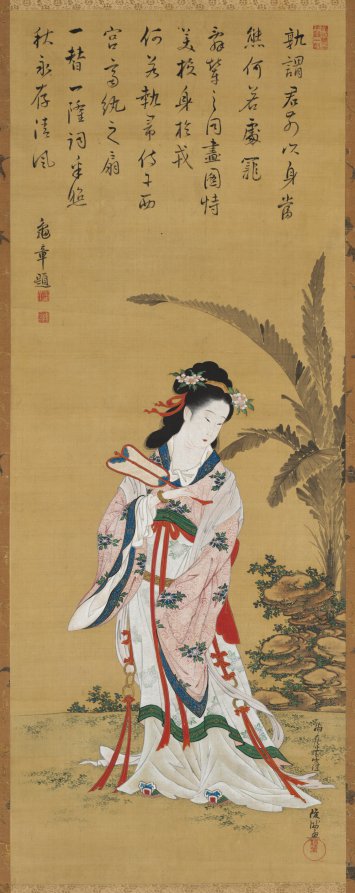
Introduction: The Thread of Imperial Legacy
In the hushed ateliers of Lauren Fashion Heritage Lab, where the past is not merely preserved but woven into the future, we turn our gaze eastward. The subject of this heritage research artifact is Chinese beauty, as articulated through the materiality of silk—a fibre that has, for millennia, been the embodiment of refinement, power, and aesthetic transcendence. Our context is the legacy of imperial silk weaving, a tradition that reached its apogee in the workshops of the Ming and Qing dynasties, where the loom was not a tool of commerce but an instrument of statecraft. For the connoisseur of Savile Row, where cloth is cut with the precision of a surgeon’s scalpel, there is a profound kinship with the Chinese weaver who, with equal exactitude, transformed raw silk into a canvas for imperial ambition. This paper examines how silk, as a material, encodes a philosophy of beauty that is at once tactile, visual, and symbolic—a legacy that continues to inform the most discerning of contemporary practices.
Materiality: The Fabric of Heaven and Earth
Silk is not merely a textile; it is a material testament to the Chinese worldview. The silkworm, Bombyx mori, was revered as a creature of cosmic significance, its cocoon a metaphor for the cycle of life, death, and rebirth. In the imperial context, silk was the exclusive preserve of the emperor and his court, a privilege codified in sumptuary laws that dictated who could wear what, and when. The materiality of silk—its lustre, its drape, its ability to take dye with an almost supernatural vibrancy—made it the ideal medium for expressing the Confucian ideals of harmony and hierarchy. The weaver’s art was one of control: the warp and weft, like the yin and yang, were balanced with mathematical precision. This is not the soft, yielding silk of a negligee; it is a silk that holds its shape, that announces its presence, that commands respect. For the Savile Row tailor, who understands that the hand of a cloth is its soul, imperial silk offers a lesson in the marriage of strength and suppleness.
The Loom as a Laboratory of Beauty
The imperial workshops of Suzhou, Hangzhou, and Nanjing were the crucibles of this beauty. Here, the kesi (cut silk) technique, a form of tapestry weaving that creates a tapestry-like effect with discontinuous wefts, was perfected. This method allowed for the rendering of intricate patterns—dragons, phoenixes, clouds, and waves—with a three-dimensionality that defied the flatness of the loom. The beauty of kesi lies in its illusion of depth, a quality that resonates with the Western tradition of trompe-l’oeil. Yet, where the European painter sought to deceive the eye, the Chinese weaver sought to elevate the spirit. Each thread was imbued with meaning: the five-clawed dragon symbolized the emperor’s supreme authority; the phoenix, the empress’s grace; the cloud, the celestial realm. This is not decoration for decoration’s sake; it is a language of power and virtue woven into the very fabric of the garment.
The Aesthetic of Restraint and Opulence
Chinese imperial beauty, as expressed through silk, is a study in paradoxical restraint. On one hand, the use of colour was governed by a strict hierarchy: yellow was reserved for the emperor, blue for the princes, and so on. The palette was not one of riotous excess but of controlled opulence. The dyes, derived from plants and minerals, produced hues that were deep, saturated, and enduring—qualities that the Savile Row clothier would recognize in a well-aged tweed or a perfectly patinated worsted. On the other hand, the embroidery that adorned these silks was a tour de force of technical virtuosity. The su xiu (Suzhou embroidery) tradition, with its use of split threads and invisible stitches, created surfaces that were almost painterly in their subtlety. The beauty here is not in the loud proclamation but in the quiet mastery of the hand. It is a beauty that rewards close inspection, that reveals its secrets only to the patient eye—a principle that the bespoke tailor understands intimately.
The Legacy of the Dragon Robe
Consider the dragon robe (longpao) of the Qing dynasty. This garment, worn by the emperor for formal occasions, is a masterpiece of material storytelling. The robe is cut from a single piece of silk, woven to shape on the loom, a feat of engineering that anticipates the modern practice of zero-waste pattern cutting. The twelve symbols of imperial authority—the sun, the moon, the constellation, the mountain, the dragon, the pheasant, the temple cups, the aquatic grass, the flames, the grains of rice, the axe, and the fu symbol—are embroidered with such precision that they become a cosmological map on the wearer’s body. The beauty of the dragon robe is not merely aesthetic; it is performative. When the emperor moved, the silk caught the light, the symbols shifted, and the garment became a living embodiment of the Mandate of Heaven. For the modern designer, this offers a profound lesson: that beauty is not static but kinetic, a dialogue between the material, the body, and the context.
Contemporary Resonance: Silk as a Bridge
How does this legacy inform the work of the Lauren Fashion Heritage Lab? We do not seek to replicate the past but to translate its principles into a contemporary idiom. The materiality of imperial silk—its weight, its lustre, its symbolic density—offers a counterpoint to the ephemeral, fast-fashion ethos of our age. In our research, we explore how traditional weaving techniques can be adapted for modern looms, how natural dyes can be revived for sustainable production, and how the narrative power of imperial motifs can be reimagined for a global audience. The Savile Row client, who values provenance and craftsmanship, is the natural custodian of this heritage. When a cloth is woven with the same care as a Ming dynasty kesi, it carries a story that transcends the garment itself. This is the ultimate luxury: not rarity, but meaning.
Conclusion: The Thread Unbroken
Chinese beauty, as articulated through imperial silk, is a philosophy of materiality. It teaches us that the finest cloth is not merely a surface but a repository of culture, a testament to the human capacity for precision and imagination. In the hands of the weaver, the silk becomes a bridge between heaven and earth, between the emperor and his subjects, between the past and the present. For the Lauren Fashion Heritage Lab, this is not a historical curiosity but a living tradition. As we continue our work, we do so with the knowledge that every thread we handle carries the weight of centuries. And in the quiet, deliberate act of weaving, we honour the legacy of those who came before, ensuring that the beauty of Chinese silk remains not a relic but a source of inspiration for generations to come.