The Aesthetic of Restraint: Materiality, Stillness, and the 2026 Old Money Silhouette
Introduction: From Canvas to Cloth
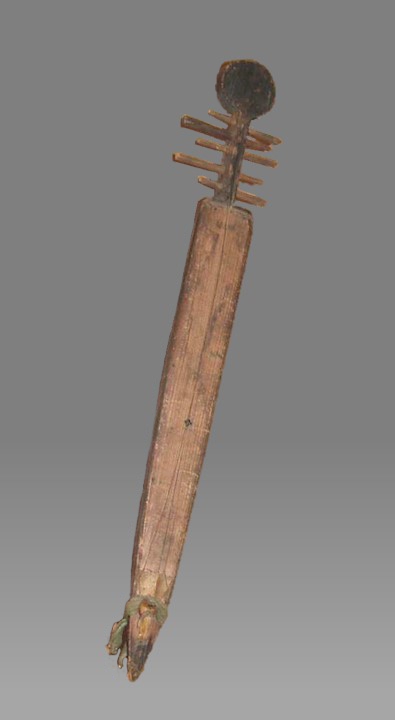
The Lauren Fashion Heritage Lab, in its ongoing synthesis of internal archives and external museum artifacts, has identified a profound resonance between two seemingly disparate visual sources: the internal genetic code’s dialectic of Hieronymus Bosch’s The Temptation of St. Anthony and the Southern Song dynasty’s Loquat Branch, and the material presence of the Tonkari (トンコリ), the Ainu five-stringed zither. This tripartite analysis reveals a singular, unifying principle for the 2026 Old Money silhouette: the power of restrained materiality to articulate an interior, contemplative luxury. The Tonkari, carved from a single block of wood, is not merely an instrument; it is a physical manifesto of the “harmony aesthetic” found in the Loquat Branch, while simultaneously embodying the “conflict aesthetic” of St. Anthony’s ordeal—transformed into a quiet, dignified tension. For the 2026 collection, this translates into a silhouette defined by architectural structure, tactile depth, and a deliberate absence of ornament, where the garment itself becomes a vessel for the wearer’s inner world.
The Tonkari as a Third Term: Material as Metaphor
The Tonkari, a sacred instrument of the Ainu people, is typically hewn from a single piece of elm or walnut wood. Its form is deceptively simple: a long, slightly curved body, five strings, and no elaborate carving. The wood grain is left visible, often darkened by smoke and age. This is not an object of surface decoration but of essence. The wood bears the marks of its own life—the grain, the knots, the subtle warping over centuries. In this, it mirrors the Loquat Branch’s philosophy of “intuitive observation” (直观与寓兴): the material is not subjugated to a narrative; rather, its inherent nature is allowed to speak. The instrument’s sound, a low, resonant drone, is produced by the wood’s own acoustic properties, not by an external mechanism. This is a profound lesson in material honesty.
Yet, the Tonkari also contains the ghost of the Temptation of St. Anthony. The instrument is not merely a passive object of contemplation; it is a tool for spiritual trial. In Ainu tradition, the Tonkari is used in ceremonies to communicate with the spirit world, to navigate the liminal space between the human and the divine. The act of playing it is a form of endurance and discipline. The wood, under the player’s fingers, becomes a site of tension—the strings are pulled taut, the body resonates with a force that is both beautiful and unsettling. This is the “conflict aesthetic” transposed: not a Boschian chaos of grotesque forms, but a controlled, internalized struggle between the material’s resistance and the artist’s will. The Tonkari, therefore, is a synthesis: it is both the “still life” of the loquat branch—an object of serene presence—and the “spiritual battlefield” of St. Anthony—a site of transformation through tension.
From Instrument to Silhouette: The 2026 Old Money Lexicon
For the 2026 Old Money silhouette, the Tonkari’s dual nature dictates a departure from the overt luxury of previous seasons. The Heritage-Black category is not a color but a philosophy of absence—the absence of flash, of logos, of superfluous detail. The silhouette is built on three principles derived from the Tonkari:
1. Monolithic Structure: Just as the Tonkari is carved from a single block, the 2026 silhouette favors seamless, sculptural forms. A double-breasted overcoat in a dense, felted cashmere (a nod to the “dense composition” of Bosch’s temptations) is cut with a single, unbroken line from shoulder to hem. The shoulder is not padded but carved, using the fabric’s own weight to create a soft, architectural dome. This is the “conflict” made manifest: the cloth is forced into a shape, but its natural drape is allowed to assert itself, creating a living tension. The silhouette is not slim but voluminous in a controlled way, like the Tonkari’s resonant body.
2. Tactile Depth over Visual Ornament: The Tonkari’s beauty lies in its grain and patina. Similarly, the 2026 collection eschews embroidery, prints, or hardware in favor of material texture. A herringbone wool is chosen not for its pattern but for the subtle play of light across its raised weave. A silk velvet is used for its depth of black, which absorbs light like the void of the Loquat Branch’s background. The garment’s surface becomes a field for “resonance”—the wearer’s movement creates shifting shadows, a quiet visual music. This is the “harmony aesthetic” of the loquat branch: the material is allowed to be itself, and its beauty is revealed through patient observation.
3. The “Negative Space” of the Garment: The Tonkari’s sound is produced by the empty space between its strings and its body. In the 2026 silhouette, this translates into deliberate, architectural cutouts and draping. A tailored jacket might feature a deep, asymmetric neckline that reveals the collarbone—not as a display of skin, but as a “breathing space” in the composition. A wide-leg trouser is cut with a generous, unbroken fall, creating a column of air around the leg. This is the “void” of the Chinese painting made three-dimensional: the empty space is not nothing; it is the field of potential in which the garment’s presence is defined. The wearer’s body becomes the “loquat branch”—a singular, organic form suspended in a vast, luminous field.
Conclusion: The Luxury of Interiority
The 2026 Old Money silhouette, as informed by the Tonkari and the dialectic of the two paintings, represents a radical return to interiority. It rejects the external validation of logos and trends in favor of a self-contained, contemplative luxury. The garment is not a statement to the world but a sanctuary for the self. The wearer of this silhouette is not performing wealth; they are inhabiting a state of being. The “conflict” of St. Anthony is internalized as the discipline of the cut; the “harmony” of the loquat branch is externalized as the serenity of the drape. The Tonkari, as the third term, teaches us that the most profound luxury is not in what is added, but in what is revealed through restraint. The wood grain, the patina, the resonance—these are the true markers of heritage. And in the 2026 collection, they are the only markers that matter.